


Cantabria inicia desarrollo estratégico de hidrógeno con red troncal y almacenamiento subterráneo en cavidades salinas
Cantabria inicia desarrollo estratégico de hidrógeno con red troncal y almacenamiento subterráneo en cavidades salinas
H2NEWS
Fecha publicada: 09 Julio, 2025
La Región de Cantabria, España, ha dado un paso clave en su integración a la red troncal española de hidrógeno con el inicio del Plan Conceptual de Participación Pública (PCPP), que contempla la construcción de 140 kilómetros de hidroductos y el desarrollo del almacenamiento subterráneo de hidrógeno en cavidades salinas. El proceso, liderado por Enagás, se extenderá en la región entre el 7 de julio y el 14 de agosto de 2025.
Uno de los pilares del proyecto es el almacenamiento North 1, que se ejecutará en colaboración con Solvay en la localidad de Polanco. Esta infraestructura se considera estratégica por sus condiciones geológicas favorables y permitirá avanzar en la seguridad energética y en la gestión eficiente de este vector. Además, el trazado del hidroducto se articulará en dos tramos: Llanera-Reocín (38 km) y Reocín-Arrigorriaga (102 km), atravesando un total de 26 localidades dentro del Eje de la Cornisa Cantábrica.
Torrelavega, en este contexto, está llamada a convertirse en un nodo esencial para la producción y el consumo de hidrógeno verde, al permitir la conexión de futuros proyectos industriales con la red nacional.
Tanto la red troncal como el almacenamiento han sido reconocidos como Proyectos de Interés Común (PCI) por la Unión Europea, dada su relevancia para avanzar en la descarbonización del continente.
El mayor plan de participación pública del país
El despliegue en Cantabria forma parte del mayor proceso de participación pública jamás desarrollado en España para una infraestructura energética, que abarcará 13 comunidades autónomas y más de 500 municipios durante 2025 y 2026. Enagás lanzó esta iniciativa el 25 de abril en el Centro Nacional del Hidrógeno en Puertollano (Castilla-La Mancha) y ya ha realizado actividades en Extremadura y Andalucía.
El PCPP está diseñado para recoger aportaciones de más de 50 administraciones públicas, 380 organizaciones y cualquier ciudadano interesado. Su duración estimada es de 18 meses, al término de los cuales se publicará un informe con los resultados del proceso.
Impulso político y territorial
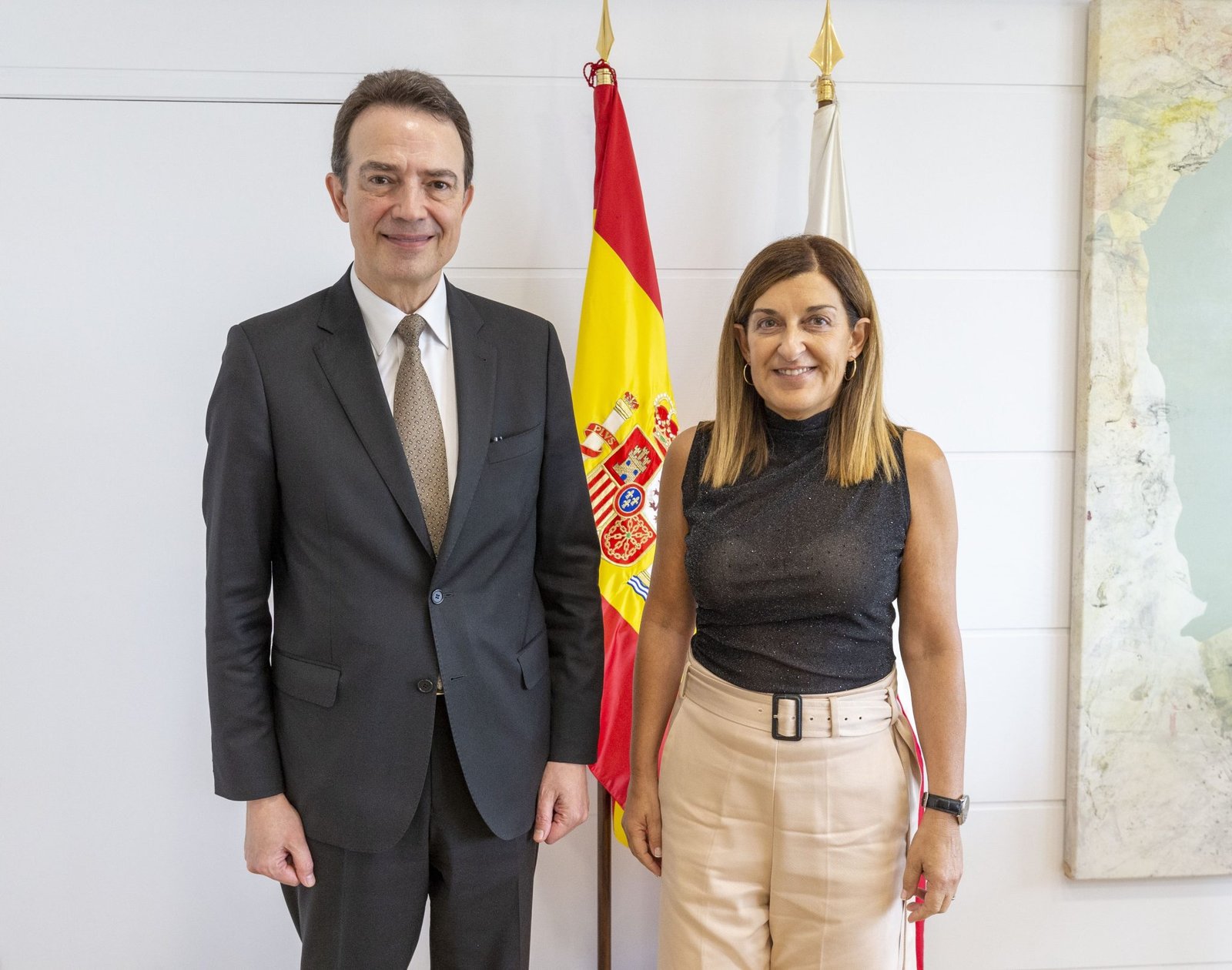
El arranque oficial en Cantabria fue protagonizado por la presidenta regional, María José Sáenz de Buruaga, y el consejero delegado de Enagás, Arturo Gonzalo, en una reunión celebrada en la sede del Gobierno autonómico en Santander.
Buruaga calificó este hito como “el pistoletazo de salida” para el desarrollo del hidrógeno en la región, destacando su papel en la reindustrialización sostenible y como eje estratégico del modelo de desarrollo regional que impulsa su Gobierno. Agradeció además la colaboración de Enagás y reafirmó su respaldo al proyecto.
Por su parte, Gonzalo subrayó que “Cantabria va a jugar un papel decisivo en la infraestructura interior de hidrógeno en España, tanto por su ubicación dentro del Eje de la Cornisa Cantábrica como por sus condiciones geológicas”. Añadió que el proceso participativo promovido por Enagás “es clave para dar voz a ciudadanos e instituciones en un proyecto de país que impulsará el desarrollo económico y social desde los territorios”.
Hacia una transición energética inclusiva
Con esta iniciativa, Enagás y el Gobierno de Cantabria consolidan su compromiso con una transición energética justa, inclusiva y participativa, en línea con los objetivos climáticos de España y la Unión Europea. El PCPP busca garantizar que la planificación e implementación de esta infraestructura se realice desde fases tempranas con enfoque social, ambiental y de gobernanza territorial.
English Version
The autonomous region of Cantabria, in northern Spain, has taken a decisive step toward integrating into the Spanish hydrogen backbone with the launch of the Public Conceptual Participation Plan (PCPP). This milestone includes the development of a 140-kilometre hydrogen pipeline and the establishment of the North 1 underground hydrogen storage facility in salt caverns—one of the first of its kind in the country. The regional participation process will take place from July 7 to August 14, 2025.
The North 1 facility will be developed jointly by Enagás and Solvay in the municipality of Polanco. Its geological conditions make it suitable for large-scale, strategic hydrogen storage, contributing to Spain’s energy resilience. The regional pipeline will be implemented along two sections—Llanera–Reocín (approx. 38 km) and Reocín–Arrigorriaga (approx. 102 km)—crossing 26 municipalities and forming part of the Cantabrian Corridor, a critical axis for the Iberian hydrogen infrastructure.
The region is expected to play a pivotal role in Spain’s hydrogen economy, with the city of Torrelavega emerging as a key industrial hub for green hydrogen production and consumption. Both the hydrogen pipeline and the underground storage are recognised as Projects of Common Interest (PCIs) by the European Commission, reflecting their strategic importance for EU-wide decarbonisation efforts.
Largest participatory process for energy infrastructure in Spain
The initiative is part of the largest public engagement effort ever undertaken in Spain for an energy project. The PCPP will be rolled out across 13 autonomous regions and more than 500 municipalities throughout 2025 and 2026. Enagás officially launched the national plan on April 25 at the National Hydrogen Centre in Puertollano, Castilla-La Mancha. Activities have since expanded to Extremadura and Andalusia.
The participation process aims to gather feedback from over 50 public administrations and 380 organisations, while also inviting contributions from citizens. It is expected to run for 18 months, culminating in a final report to inform the next stages of project design and permitting.
Institutional alignment and strategic vision
The Cantabrian launch was marked by a meeting between María José Sáenz de Buruaga, President of Cantabria, and Arturo Gonzalo, CEO of Enagás, at the regional government headquarters in Santander.
President Buruaga described the launch as the “starting signal” for the development of the hydrogen economy in the region. She reaffirmed the government’s commitment to supporting this strategic project, which aligns with Cantabria’s goals for sustainable reindustrialisation and economic diversification.
Enagás CEO Arturo Gonzalo emphasised Cantabria’s unique value within Spain’s hydrogen infrastructure: “The region will play a decisive role in the national hydrogen network, both because of its strategic location along the Cantabrian Axis and its geological suitability for future hydrogen storage.” He highlighted the PCPP as a “key participatory process that gives voice to citizens and institutions in shaping a project of national scope that will strengthen economic and social development at the regional level.”
Transparent, inclusive and forward-looking energy transition
Through this joint initiative, Enagás and the Government of Cantabria reinforce their shared commitment to a transparent, inclusive and just energy transition. The project is fully aligned with the decarbonisation targets of Spain and the European Union and aims to ensure that environmental, territorial and social considerations are embedded in early planning phases.

