


UE y Egipto sellan acuerdos para transformar la red eléctrica y producir amoníaco a partir de hidrógeno verde
UE y Egipto sellan acuerdos para transformar la red eléctrica y producir amoníaco a partir de hidrógeno verde
Fecha publicada: 02 Marzo, 2026
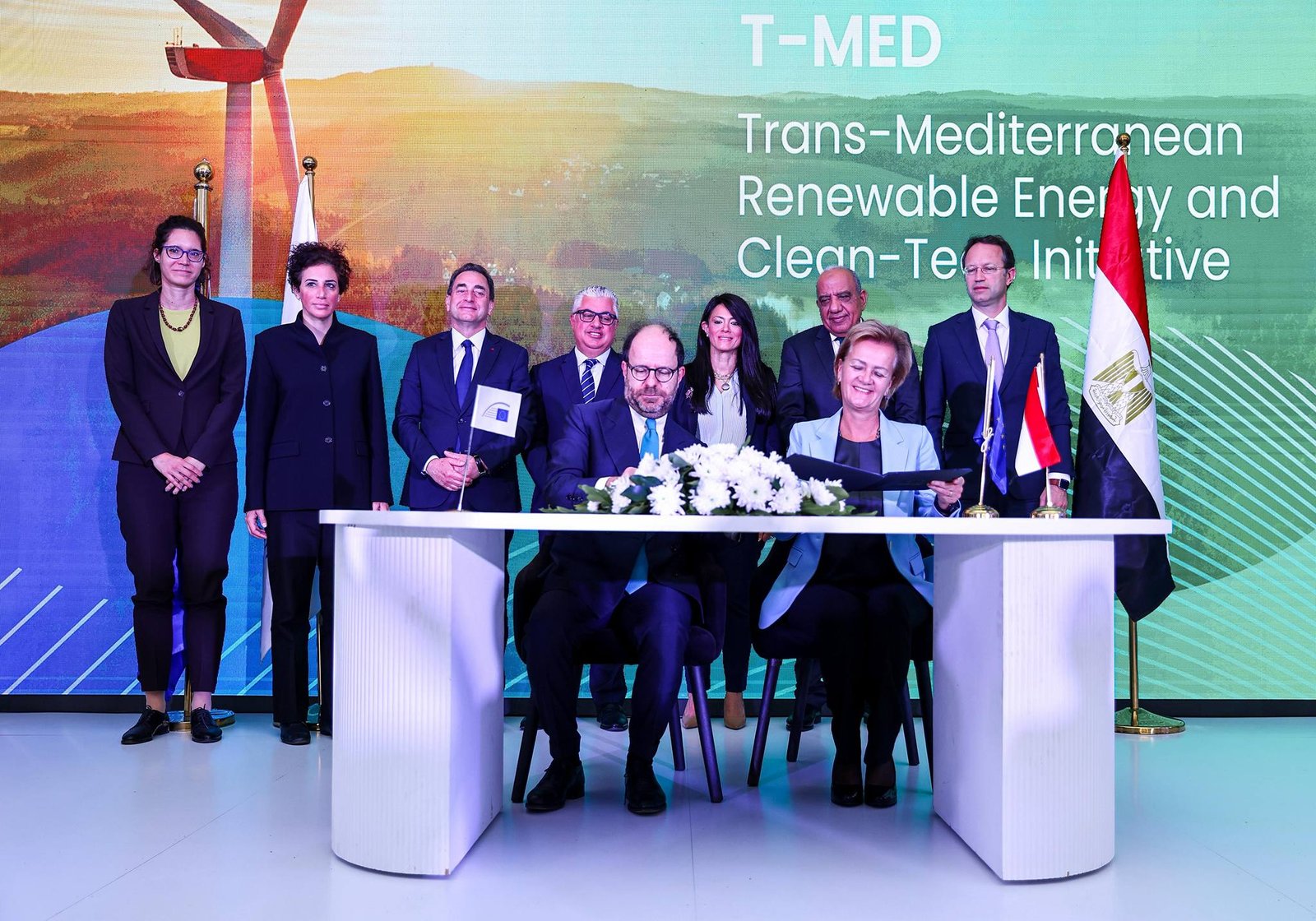
En el marco de la conferencia “The Future of Sustainable Energy in Egypt 2040: Cooperation for Shared Prosperity”, organizada por la European Union el pasado 10 de febrero, se han consolidado pasos claves para la infraestructura energética y la descarbonización industrial en Egipto. El evento contó con la participación de figuras clave como la Ministra de Planificación, Economía y Cooperación Internacional, Rania El-Mashat; el Ministro de Energía Renovable y Electricidad, Dr Mahmoud Esmat; y la Embajadora de la Unión Europea en El Cairo, Angelina Eichhorst.
Inyecciones de Capital: Red Eléctrica y Amoníaco Verde
Durante la jornada, se formalizaron acuerdos financieros de alto impacto para la región:
1.- Infraestructura de Red: Se firmó un acuerdo de subvención por €90 millones, otorgado por la European Union y gestionado por el European Investment Bank. Estos fondos están destinados a fortalecer la red eléctrica egipcia y aumentar la capacidad de integración de energías renovables.
2.- Hidrógeno Verde: Se otorgó una subvención de €35 millones a la compañía noruega Scatec para el desarrollo de su proyecto de green ammonia en Ain Sokhna, consolidando el rol de la Suez Canal Economic Zone Authority, representada por su presidente Eng Walid Gamal El-Din.
La Visión de Rania El-Mashat: Un Hub Regional
La Dr El-Mashat destacó que la transición hacia sistemas energéticos sostenibles es el motor del desarrollo inclusivo en Egipto. Según la ministra, la estrategia nacional hacia 2040 busca un equilibrio entre el crecimiento económico, la seguridad energética y la reducción de emisiones, posicionando al país como un hub regional de energía en el Eastern Mediterranean. “El sector energético ocupa un papel central dentro de los pilares de nuestra asociación con la UE, a través de paquetes integrados de financiación concesional, garantías de inversión y asistencia técnica”, afirmó la ministra.
La ministra subrayó la efectividad de mecanismos de financiamiento y plataformas de coordinación:
- Plataforma “Novi”: Un modelo nacional que integra agua, alimentos y energía. En tres años, ha movilizado cerca de $5 mil millones para implementar proyectos de energía renovable con una capacidad de 4.2 GW a través del sector privado.
- EFSD+ (European Fund for Sustainable Development Plus): Herramienta clave para estimular la inversión europea en hidrógeno verde y modernización de redes.
- Iniciativa T-MED: Marco de cooperación transmediterránea en energía y tecnologías limpias.
- El evento contó además con la presencia de los embajadores de Spain y France, junto a representantes de la banca europea, reforzando la Strategic and Comprehensive Partnership lanzada en marzo de 2024, que representa el nivel más alto de cooperación de la European Union con terceros países.
English Version
Minister of Planning, Economic Development and International Cooperation Rania El-Mashat participated on Tuesday, February 10, 2026, in the conference organised by the European Union on “The Future of Sustainable Energy in Egypt 2040: Cooperation for Shared Prosperity”, attended by Dr Mahmoud Esmat, Minister of Electricity and Renewable Energy; Ms Angelina Eichhorst, Ambassador of the European Union to Cairo; Eng Walid Gamal El-Din, Chairman of the Suez Canal Economic Zone Authority; the ambassadors of Spain and France; and representatives of European banks. During the conference a grant agreement was signed by the European Union, managed by the European Investment Bank, worth €90 million to boost investments in Egypt’s power grid and build renewable energy capacity, and a €35 million grant to the Norwegian company Scatec for the green ammonia project at Ain Sokhna.
In her remarks, Dr El-Mashat stressed that the transition to sustainable, secure and efficient energy systems is one of the main drivers of inclusive development in Egypt. It forms part of the national narrative for comprehensive development aimed at achieving sustainable economic growth, enhancing the competitiveness of the economy, and meeting climate action objectives.
Dr El-Mashat explained that the event reflects the depth of the partnership between the Arab Republic of Egypt and the European Union and their shared commitment to supporting the energy transition, particularly in light of rapidly changing global conditions that make it necessary to balance economic growth, energy security and emissions reduction.
She added that the Egyptian state has adopted an ambitious vision for the energy sector through to 2040, based on expanding renewable energy sources, improving energy efficiency, and maximising the use of diverse resources, thereby enhancing Egypt’s position as a regional energy hub in the Eastern Mediterranean and supporting the achievement of the Sustainable Development Goals.
The minister noted that the launch of the Strategic and Comprehensive Partnership between Egypt and the European Union in March 2024 marked a turning point in bilateral relations, representing the highest level of partnership the EU has with other countries. She emphasised that the energy sector occupies a central role within the pillars of this partnership, through integrated packages of concessional financing, investment guarantees and technical assistance.
She affirmed that the Ministry of Planning, Economic Development and International Cooperation plays a pivotal role in coordinating international partnerships and ensuring that investments are aligned with national priorities, foremost among them the transformation of the energy sector, pointing to close cooperation with European financial institutions, led by the European Investment Bank and the European Bank for Reconstruction and Development.
In this context, the minister outlined the experience of the “Novi” platform as a pioneering national model for integrating the water, food and energy sectors. The programme succeeded, over three years, in mobilising around $5 billion to implement renewable energy projects with a capacity of 4.2 GW through the private sector, reinforcing Egypt’s status as a regional model in climate finance and green development.
She also highlighted the importance of the European Fund for Sustainable Development Plus (EFSD+) mechanism in stimulating European investment in Egypt, particularly in renewable energy, green hydrogen, energy efficiency and power grid modernisation, alongside the T-MED initiative for cross-Mediterranean cooperation in energy and clean technology.
Dr El-Mashat affirmed that the transformation of the energy sector is a key part of the national narrative for comprehensive development, which links economic policies, investment in human capital, strengthening the role of the private sector and the green transition, ensuring inclusive and sustainable growth and enhancing the resilience of the Egyptian economy to global shocks.
The minister concluded her speech by underlining that Egypt’s commitment to the energy transition is long-term, based on partnership, innovation and sustainable investment to achieve economic development.

