


Delegación técnica de Chile y Brasil conoce en Europa soluciones de hidrógeno verde en operación industrial
Delegación técnica de Chile y Brasil conoce en Europa soluciones de hidrógeno verde en operación industrial
Fecha publicada: 24 Junio, 2026
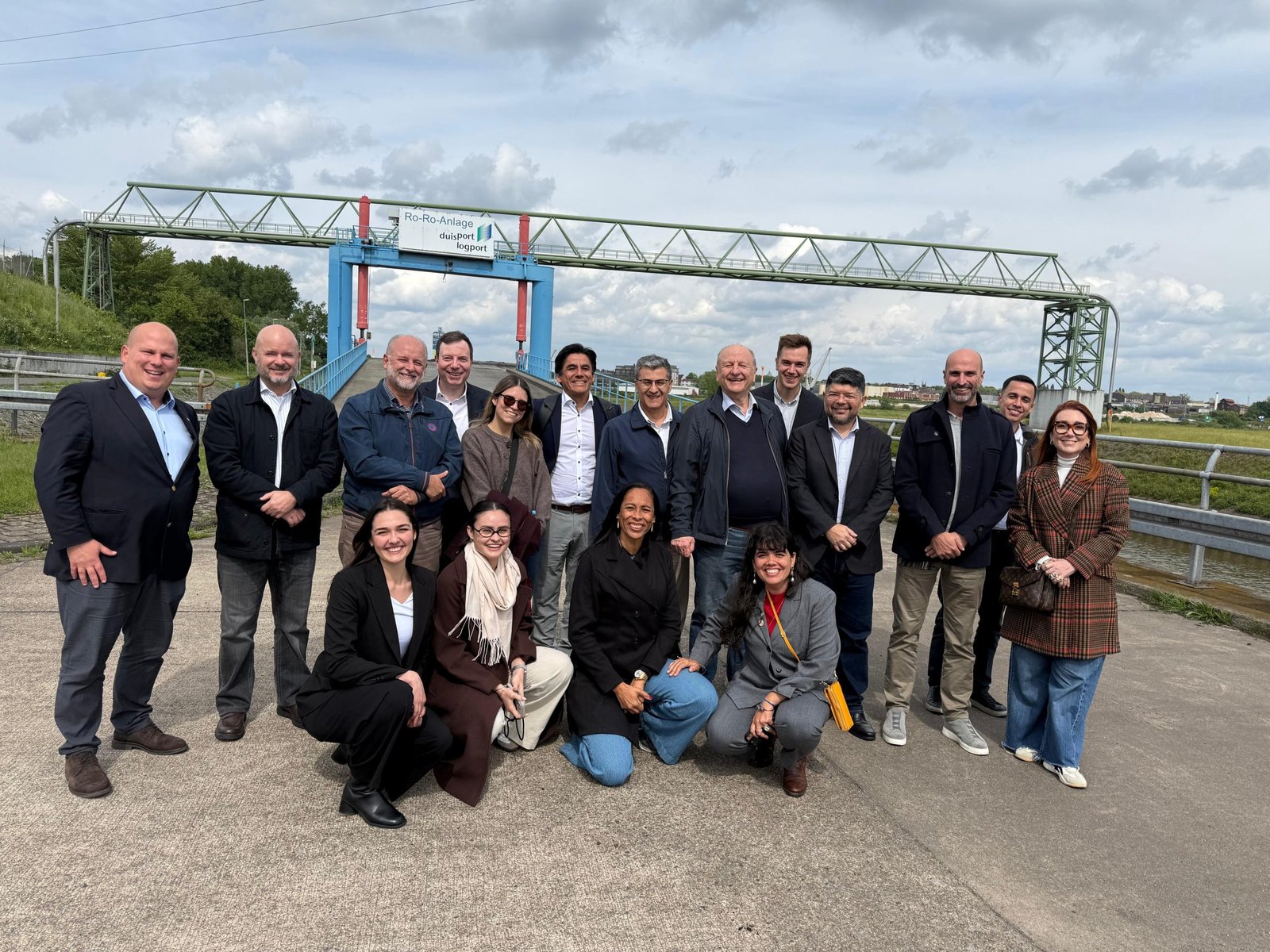
Una delegación de 26 representantes técnicos de Chile y Brasil participó en mayo en una gira tecnológica por Alemania, Países Bajos y Bélgica, orientada a conocer soluciones de hidrógeno verde modulares y escalables en operación industrial real.
La actividad se realizó en el marco del programa H2Uppp, financiado por el Ministerio Federal de Economía y Energía de Alemania (BMWE) e implementado por GIZ, bajo la alianza público-privada (PPP) con la empresa alemana Wilo “H2 Power Plants for LATAM”, con el apoyo de las Cámaras Chileno-Alemana de Comercio (AHK).
La visita central tuvo lugar en Wilopark, casa matriz de WILO en Dortmund, donde la delegación recorrió la planta de energía a hidrógeno de la compañía. El sistema integra generación fotovoltaica en sitio de 3,0 MWp, un electrolizador AEM de 228 kW con una producción de 4,3 kg de hidrógeno por hora, almacenamiento de 520 kg y celdas de combustible de 76,5 kW para reelectrificación, configurado como respaldo energético de hasta 125 horas.
El programa incluyó además visitas a Duisburger Hafen AG (duisport), el mayor puerto interior del mundo; a Thyssenkrupp Steel Europe en Duisburgo, el principal polo siderúrgico de Europa, donde se presentó la próxima licitación de suministro de hidrógeno de la compañía; y una recepción de networking en Siemens Energy, actividades coordinadas junto a Duisburg Business & Innovation.
La gira contempló también la participación en el World Hydrogen Summit & Exhibition 2026 en Róterdam, incluyendo el side event de Chile, organizado por la Embajada de los Países Bajos y ProChile, e inaugurado por el Subsecretario de Energía de Chile, y el side event regional “Powering Decarbonisation: Europe–Latin America Hydrogen Partnerships”. Este último reunió a más de 230 participantes y a representantes del BMWE, la Comisión Europea, la Embajada de los Países Bajos, el Puerto de Róterdam, HINTCO, Green Energy Park y GIZ, en torno sesiones relacionadas con descarbonización industrial, e-fuels para transporte marítimo y aviación, corredores internacionales e infraestructura portuaria, y modelos de propiedad y financiamiento. La gira cerró con una visita al Puerto de Amberes-Brujas, en Bélgica.
“Esta gira permite que equipos técnicos de Brasil y Chile vean en operación las soluciones que GIZ y sus aliados están promoviendo en sus territorios. El hidrógeno verde no es un concepto: está funcionando en Dortmund, en los puertos de Róterdam y Amberes. Ahora la pregunta es cómo trasladar ese conocimiento y esas alianzas al contexto de América Latina”, sostuvo Javier Ortiz de Zúñiga, director del Portafolio de Energía Chile (Multipaís) de GIZ Cono Sur.
“Como empresa comprometida con la protección del clima, fue natural para el Grupo Wilo desarrollar una estrategia de hidrógeno a largo plazo. Los productos y sistemas de Wilo se utilizan desde hace años en numerosas tecnologías renovables, como los parques eólicos y las plantas de biogás. Asimismo, el portafolio de Wilo tiene demanda a lo largo de toda la cadena de valor del hidrógeno. Gracias al conocimiento y experiencia de un grupo tecnológico multinacional, y como uno de los principales proveedores premium de bombas y sistemas de bombeo a nivel mundial, Wilo aspira a convertirse en un actor global en la generación, almacenamiento, distribución y utilización del hidrógeno”, señaló Gero Böhmer, Director de Government & Public Affairs del Grupo Wilo.
Sobre H2Uppp The International Hydrogen Ramp-up Programme (H2Uppp) is supporting entrepreneurial engagement in the ramping-up of hydrogen in the Global South and is a funding programme of the German Federal Ministry for Economic Affairs and Energy (BMWE) and is implemented by the Deutsche Gesellschaft für Internationale Zusammenarbeit (GIZ).
English Version
A delegation of 26 technical representatives from Chile and Brazil participated in May in a technical study tour through Germany, the Netherlands, and Belgium, aimed at observing modular and scalable green hydrogen solutions in real industrial operation.
The activity took place under the H2Uppp programme, funded by the German Federal Ministry for Economic Affairs and Energy (BMWE) and implemented by GIZ, under the public-private partnership (PPP) with German company Wilo “H2 Power Plants for LATAM”, with the support of the German-Chilean Chamber of Commerce (AHK Chile).
The central visit occurred at Wilopark, Wilo’s headquarters in Dortmund, where the delegation toured the company’s hydrogen power plant. The system integrates on-site photovoltaic generation of 3.0 MWp, a 228 kW AEM electrolyzer producing 4.3 kg of hydrogen per hour, 520 kg of storage, and 76.5 kW fuel cells for re-electrification, configured as energy backup for up to 125 hours.
The programme also included visits to Duisburger Hafen AG (duisport), the world’s largest inland port; Thyssenkrupp Steel Europe in Duisburg, Europe’s leading steelmaking site, where the company presented its upcoming hydrogen supply tender; and a networking reception at Siemens Energy, activities coordinated with Duisburg Business & Innovation.
The tour also encompassed participation in the World Hydrogen Summit & Exhibition 2026 in Rotterdam, including the Chile side-event, organized by the Embassy of the Netherlands and ProChile, and opened by Chile’s Deputy Minister of Energy, and the regional side-event “Powering Decarbonisation: Europe-Latin America Hydrogen Partnerships”. The latter gathered over 230 participants and representatives from BMWE, the European Commission, the Embassy of the Netherlands, Port of Rotterdam, HINTCO, Green Energy Park, and GIZ, focusing on industrial decarbonization, e-fuels for maritime and aviation transport, international corridors and port infrastructure, and ownership and financing models. The tour concluded with a visit to the Port of Antwerp-Bruges in Belgium.
“This tour allows technical teams from Brazil and Chile to see in operation the solutions that GIZ and its partners are advancing in their territories. Green hydrogen is not a concept, it is working in Dortmund, in the ports of Rotterdam and Antwerp, in European steelworks. Now the question is how to transfer that knowledge and those partnerships to the Latin American context,” said Javier Ortiz de Zúñiga, director of the Energy Portfolio Chile (Multipaís) of GIZ Cono Sur.
“As a climate-protection company, it was natural for the Wilo Group to develop a long-term hydrogen strategy. Wilo products and systems have long been used in numerous renewable technologies, such as wind turbines and biogas plants. And the Wilo portfolio is in demand along the entire hydrogen value chain as well. With the know-how of a multinational technology group and as one of the world’s leading premium suppliers of pumps and pump systems, Wilo aims to become a global player in the generation, storage, distribution and utilisation of hydrogen”, statement by Gero Böhmer, Director, Government & Public Affairs, Wilo Group.
The H2POWERPLANT uses electrolysis to convert green solar, wind and hydropower into green hydrogen. When it’s needed, a fuel cell can then be used to convert the hydrogen back into electrical energy. The waste heat is either used in the interconnected system for heating, stored or converted into cooling on site. This sustainable use of all released energy optimises system efficiency. The process relies on the precise configuration of the water-bearing systems in addition to intelligent control of energy and load management.
About H2Uppp
The International Hydrogen Ramp-up Programme (H2Uppp) is supporting entrepreneurial engagement in the ramping-up of hydrogen in the Global South and is a funding programme of the German Federal Ministry for Economic Affairs and Energy (BMWE), implemented by the Deutsche Gesellschaft für Internationale Zusammenarbeit (GIZ).

